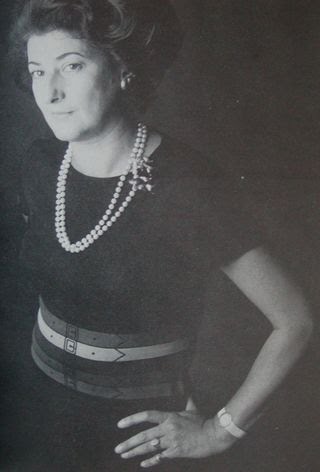
the Queen Sofia Institute, 684 Park Avenue, New York; photo Queen Sofía Spanish Institute
Balenciaga has been very much in the news lately, and I'm not referring to the innovative fashions of Nicolas Ghesquière. Rather, there have been excellent museum exhibitions of the work of the master himself, Cristóbal Balenciaga (1895-1972).
Four years ago there was an outstanding Balenciaga at the musée des Arts décoratifs at the Louvre, and last summer there was a charming exhibition, curated by Hubert de Givenchy, at the Chateau de Haroué, beautifully written about by Diane Dorrans Saeks in her wonderful blog, the Style Saloniste. In interviews over the past couple decades, Hubert de Givenchy has repeatedly acknowledged Balenciaga as his master, and is ceaseless in his admiration. Coming from a person of such peerless taste, this is the ultimate accolade.
Four years ago there was an outstanding Balenciaga at the musée des Arts décoratifs at the Louvre, and last summer there was a charming exhibition, curated by Hubert de Givenchy, at the Chateau de Haroué, beautifully written about by Diane Dorrans Saeks in her wonderful blog, the Style Saloniste. In interviews over the past couple decades, Hubert de Givenchy has repeatedly acknowledged Balenciaga as his master, and is ceaseless in his admiration. Coming from a person of such peerless taste, this is the ultimate accolade.
ww.thestylesaloniste.com/2010/07/la-vie-de-chateau-elegance-and.html
Currently, there is a wonderful exhibition at the Queen Sofía Spanish Institute in New York, just inaugurated by Queen Sofía of Spain herself. The exhibition is curated by Vogue editor Hamish Bowles, a collector of vintage Balenciaga couture. The show was conceived by Oscar de la Renta, who worked at Eisa of Madrid, one of Balenciaga's outlets in Spain run by his sister. The show runs from November 19, 2010 until February 19, 2011.
What can be said about Balenciaga? He has been written about extensively, and yet he maintains great mystique and prestige. One can understand him better if he is compared with his highly esteemed contemporaries. His work is bolder and much more innovative than the designs of Chanel. It often has a distinctly Spanish look, with Flamenco ruffles, strong contrasts of colour with black, or toreador-like embroideries. But the inspiration is never literal or costume-y, a problem often seen with ethnic inspired looks of Yves Saint-Laurent. Balenciaga pieces often have a quasi-religious feeling (he attended mass regularly), inspired by clerical garments and the plain, but heavy and voluminous robes of saints and angels in oil paintings of centuries ago, notably the works of Francisco de Zurbarán.
 circa 1948 evening coat of heavy black silk ottoman, collection of Hamish Bowles; photo SwF
 vintage photo of priest in a cassock; photo, the Aesthetic Traditionalist
 from left to right: Hamish Bowles (Curator), Teresa Valente and husband Ambassador Jorge Dezcallar, Her Majesty Queen Sofía of Spain, Oscar de la Renta (Chairman, Queen Sofía Spanish Institute), Inmaculada de Habsburgo (President & CEO, Queen Sofía Spanish Institute) at the opening of the Balenciaga Exhibition, Wednesday, November 17, 2010; photograph by Mary Hillard
 flamenco inspired looks in bold black or hot colours; frills are substantial and more bold than delicate; photograph by Kenny Komer
 toreador inspiration, exquisite referencing of silhouette and proportion, without lapsing into costume; photograph by Kenny Komer
 the solemnity and dignity of uncompromising Balenciaga's black; the look is wearable for any woman of any age or stature; photograph by Kenny Komer
 neither slim nor excessively voluminous, late (1960s) Balenciaga defies being outmoded; photograph by Kenny Komer
 Balenciaga's unusual colour combinations didn't follow those of other trends of the period; clear silhouttes, heavy embroideries, and richly draped silks are typical of his work; photograph by Kenny Komer
 Balenciaga used the very finest fabrics, and was fond of material with body and structure; note his graceful signature hemlines that lower at the back; photograph by Kenny Komer
 Curator Hamish Bowles and Chairman Oscar de la Renta lead Her Majesty Queen Sofía of Spain through the exhibition galleries, Wednesday, November 17, 2010; photograph by Mary Hillard
Currently, there is a wonderful exhibition at the Queen Sofía Spanish Institute in New York, just inaugurated by Queen Sofía of Spain herself. The exhibition is curated by Vogue editor Hamish Bowles, a collector of vintage Balenciaga couture. The show was conceived by Oscar de la Renta, who worked at Eisa of Madrid, one of Balenciaga's outlets in Spain run by his sister. The show runs from November 19, 2010 until February 19, 2011.
What can be said about Balenciaga? He has been written about extensively, and yet he maintains great mystique and prestige. One can understand him better if he is compared with his highly esteemed contemporaries. His work is bolder and much more innovative than the designs of Chanel. It often has a distinctly Spanish look, with Flamenco ruffles, strong contrasts of colour with black, or toreador-like embroideries. But the inspiration is never literal or costume-y, a problem often seen with ethnic inspired looks of Yves Saint-Laurent. Balenciaga pieces often have a quasi-religious feeling (he attended mass regularly), inspired by clerical garments and the plain, but heavy and voluminous robes of saints and angels in oil paintings of centuries ago, notably the works of Francisco de Zurbarán.
 circa 1948 evening coat of heavy black silk ottoman, collection of Hamish Bowles; photo SwF
 vintage photo of priest in a cassock; photo, the Aesthetic Traditionalist
Compared with Dior, the works are less precious and bourgeois. Compared with André Courrèges or Cardin of the period, Balenciaga is not futuristic, and therefore more classic. Balenciaga's work was progressive and evolving; his very last designs were pure, and appeared simple, but were never minimalist. They strike the perfect balance of sobriety and innovation, creativity, and conservatism. His designs defy the dated aspect of fashion, so that they are eternally beautiful.
For the clientele of couture and fashion, and for experts who have worked in the garment industry, there is an irresistible attraction back to Balenciaga. In his lifetime, the Balenciaga name never appeared on inferior or mass produced products. It never seemed to require advertising or self promotion, because it existed above such mundane matters as financial concerns. The atmosphere of his couture salon on Avenue George V in Paris has been described as "hushed" and "monastic." His taste was so rarefied, that in 1968 he retired; the youth quake of the 1960s, with fast fashion, vulgar exhibitionism, and inferior quality, offended him, and he was undoubtedly weary from his relentless perfectionism and refusal to dilute his product, or veer from his highly personal style.
For the most elegant women of the world such as Pauline de Rothschild and Mona Bismarck, his farewell was a tragedy. It has been said that when wearing a Balenciaga, no other woman in the room existed. I supposed the wearer was conferred with a certain nobility, impeccable elegance, and perfect taste. If you cannot make it to the New York Balenciaga exhibition, take a look at these meticulously crafted designs, and consider the thought, repeated editing and revisions, often within millimetres, that went into these deceptively simple clothes.
For the clientele of couture and fashion, and for experts who have worked in the garment industry, there is an irresistible attraction back to Balenciaga. In his lifetime, the Balenciaga name never appeared on inferior or mass produced products. It never seemed to require advertising or self promotion, because it existed above such mundane matters as financial concerns. The atmosphere of his couture salon on Avenue George V in Paris has been described as "hushed" and "monastic." His taste was so rarefied, that in 1968 he retired; the youth quake of the 1960s, with fast fashion, vulgar exhibitionism, and inferior quality, offended him, and he was undoubtedly weary from his relentless perfectionism and refusal to dilute his product, or veer from his highly personal style.
For the most elegant women of the world such as Pauline de Rothschild and Mona Bismarck, his farewell was a tragedy. It has been said that when wearing a Balenciaga, no other woman in the room existed. I supposed the wearer was conferred with a certain nobility, impeccable elegance, and perfect taste. If you cannot make it to the New York Balenciaga exhibition, take a look at these meticulously crafted designs, and consider the thought, repeated editing and revisions, often within millimetres, that went into these deceptively simple clothes.
 from left to right: Hamish Bowles (Curator), Teresa Valente and husband Ambassador Jorge Dezcallar, Her Majesty Queen Sofía of Spain, Oscar de la Renta (Chairman, Queen Sofía Spanish Institute), Inmaculada de Habsburgo (President & CEO, Queen Sofía Spanish Institute) at the opening of the Balenciaga Exhibition, Wednesday, November 17, 2010; photograph by Mary Hillard
 flamenco inspired looks in bold black or hot colours; frills are substantial and more bold than delicate; photograph by Kenny Komer
 toreador inspiration, exquisite referencing of silhouette and proportion, without lapsing into costume; photograph by Kenny Komer
 the solemnity and dignity of uncompromising Balenciaga's black; the look is wearable for any woman of any age or stature; photograph by Kenny Komer
 neither slim nor excessively voluminous, late (1960s) Balenciaga defies being outmoded; photograph by Kenny Komer
 Balenciaga's unusual colour combinations didn't follow those of other trends of the period; clear silhouttes, heavy embroideries, and richly draped silks are typical of his work; photograph by Kenny Komer
  Balenciaga used the very finest fabrics, and was fond of material with body and structure; note his graceful signature hemlines that lower at the back; photograph by Kenny Komer
 Curator Hamish Bowles and Chairman Oscar de la Renta lead Her Majesty Queen Sofía of Spain through the exhibition galleries, Wednesday, November 17, 2010; photograph by Mary Hillard